The Future Unlocked: How Predictive Freight Tracking and Intelligent Route Planning Are Crafting a Seamless Logistics Experience

In an era where speed and precision define success, logistics has evolved from a behind-the-scenes operation into a dynamic, technology-driven powerhouse. The modern supply chain is no longer just about moving goods from point A to point B—it’s about anticipating needs, optimizing every mile, and delivering an experience that feels effortless. At the heart of this transformation lies the fusion of predictive freight tracking and intelligent route planning, two innovations that are redefining what it means to achieve a truly seamless logistics experience.
The Power of Prediction: How Freight Tracking is Becoming Proactive
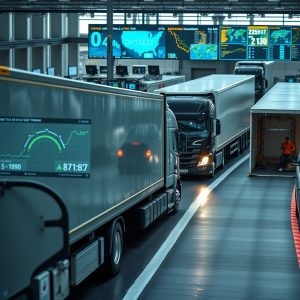
Gone are the days when shippers and customers were left in the dark, refreshing tracking pages and waiting for updates. Today, predictive freight tracking leverages advanced analytics, machine learning, and real-time data to forecast potential disruptions before they occur. Whether it’s a sudden weather delay, a port congestion, or a vehicle breakdown, these systems analyze historical patterns and current conditions to provide actionable insights. The result? Fewer surprises, reduced downtime, and a supply chain that adapts in real time.
For businesses, this means the ability to reroute shipments dynamically, notify customers of potential delays before they happen, and maintain a level of enhanced handling transparency that builds trust. For customers, it translates into peace of mind—knowing that their delivery isn’t just on its way, but that every possible scenario has been accounted for. The shift from reactive to predictive logistics isn’t just an upgrade; it’s a fundamental change in how we think about reliability.
Mapping the Smart Way: The Revolution of Intelligent Route Planning
If predictive tracking is the brain of modern logistics, then intelligent route planning is the muscle. Traditional routing methods often relied on static maps and historical data, which, while useful, couldn’t account for the fluid nature of real-world conditions. Today’s systems, however, integrate live traffic feeds, fuel efficiency algorithms, driver behavior analytics, and even environmental impact assessments to craft routes that are not just fast, but also smart.
This isn’t just about saving time—it’s about creating sustainable delivery networks that reduce carbon footprints and operational costs. For instance, a route that avoids urban congestion during peak hours might take slightly longer in distance but saves hours in transit time and gallons of fuel. Similarly, algorithms can optimize multi-stop deliveries to minimize backtracking, ensuring that every mile driven adds value. The ripple effects are profound: lower emissions, happier drivers, and a logistics network that scales efficiently without sacrificing performance.
Beyond Efficiency: The Human Impact of Smarter Logistics
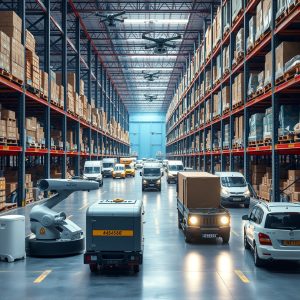
While the technological advancements are impressive, the true measure of success lies in their impact on people. For drivers, tech-enabled fleet monitoring means safer working conditions, with systems that alert them to fatigue, mechanical issues, or hazardous road conditions. For warehouse teams, automated shipment fulfillment reduces the physical strain of manual sorting, allowing them to focus on higher-value tasks. And for customers, the experience is elevated from a transaction to a relationship—one where their time, preferences, and expectations are prioritized.
Consider the rise of personalized delivery scheduling, where customers can choose not just a delivery window, but a preferred method—whether it’s a contactless drop-off, a specific time slot, or even a hyper-local pickup point. This level of customization wasn’t possible in the era of rigid logistics, but today, it’s becoming the standard. The result is a frictionless logistics interaction that feels less like a service and more like a partnership.
The Road Ahead: Where Predictive Tracking and Intelligent Routing Converge
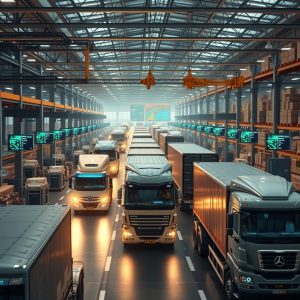
The next frontier in logistics isn’t just about making processes faster or cheaper—it’s about creating a system that is inherently adaptable. Imagine a world where collaborative freight networks allow multiple shippers to share capacity in real time, reducing empty miles and maximizing efficiency. Or where adaptive last-mile delivery systems dynamically adjust to urban traffic patterns, ensuring that even the most congested cities can enjoy same-day service. These aren’t distant dreams; they’re the logical extensions of the technologies we’re already using today.
As these systems continue to evolve, the line between logistics and customer experience will blur even further. The future belongs to those who can anticipate needs before they arise, who can turn data into action, and who understand that the most seamless logistics experience is one that feels invisible. It’s not just about moving goods—it’s about moving the industry forward, one intelligent decision at a time.
The journey toward a smarter, more responsive supply chain is well underway, and the tools to make it happen are already in our hands. The question isn’t whether logistics will change, but how quickly we can adapt to the possibilities it unlocks. The answer lies in the data we collect, the routes we optimize, and the experiences we create—one delivery at a time.