The Invisible Web: How Real-Time Transit Visibility and Adaptive Last Mile Delivery Are Redefining Logistics
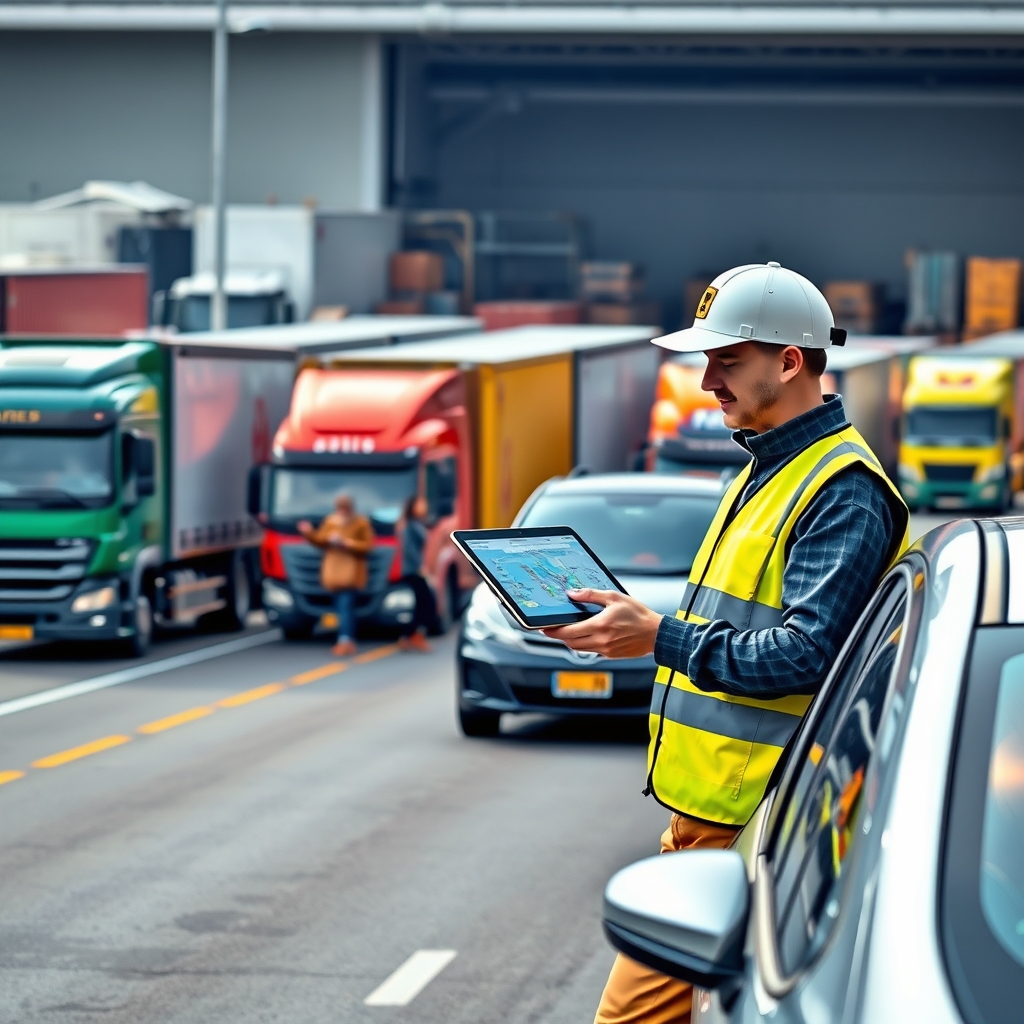
In the bustling world of modern logistics, the term “seamless” is often thrown around, but what does it truly mean? It’s not just about the speed of delivery or the efficiency of the process. It’s about the invisible threads that weave through every step of the journey, ensuring that every package, every shipment, reaches its destination with precision and care. Today, we’re going to explore two of these invisible threads: Real-Time Transit Visibility and Adaptive Last Mile Delivery.
Real-Time Transit Visibility
Imagine you’re waiting for an important package. You check your email, your phone, but you still have no idea where your package is. This is where Real-Time Transit Visibility comes into play. It’s a system that provides a live, up-to-date view of the location and status of your shipment. It’s like having a GPS for your package, but with more than just location. It provides information about the expected delivery time, any potential delays, and even the name of the driver who’s delivering your package.
Real-Time Transit Visibility is not just a convenience. It’s a necessity in today’s fast-paced world. It allows businesses to track their shipments, manage their supply chains more effectively, and provide better customer service. It’s a game-changer in the world of logistics.
How It Works
Real-Time Transit Visibility is made possible by a combination of technology and data. It uses sensors and GPS devices to track the location of shipments, and then uses this data to provide a live, up-to-date view of the shipment’s journey. This data is often displayed on a dashboard, which can be accessed by the shipper, the carrier, and sometimes even the customer.
The data used in Real-Time Transit Visibility is not just about location. It can also include information about the temperature of the shipment, the humidity, the speed of the vehicle, and even the condition of the package. This level of detail allows for a more comprehensive understanding of the shipment’s journey, and can help to identify and resolve any issues that may arise.
Adaptive Last Mile Delivery
The last mile of delivery is often the most challenging. It’s where the package leaves the truck and arrives at the customer’s doorstep. It’s where the weather, the traffic, and the customer’s availability can all impact the delivery. This is where Adaptive Last Mile Delivery comes into play.
Adaptive Last Mile Delivery is a system that uses data and technology to adapt the delivery process to the specific needs and circumstances of each delivery. It’s like having a personal assistant for every delivery, who knows the best time to deliver, the best route to take, and even the best way to handle the package.
Adaptive Last Mile Delivery can take many forms. It can be a system that uses data from previous deliveries to predict the best time to deliver, or a system that uses real-time data to adapt to changes in the delivery environment. It can even be a system that uses AI to learn from each delivery and improve over time.
How It Works
Adaptive Last Mile Delivery is made possible by a combination of data and technology. It uses data from previous deliveries to understand patterns and trends, and then uses this data to predict the best time to deliver. It uses real-time data, such as weather forecasts and traffic updates, to adapt to changes in the delivery environment. And it uses AI and machine learning to learn from each delivery and improve over time.
This data and technology can be used in many ways. It can be used to schedule deliveries, to route deliveries, to handle packages, and even to communicate with customers. It’s a comprehensive approach to the last mile of delivery, that ensures that every delivery is as efficient, as effective, and as customer-focused as possible.
In conclusion, Real-Time Transit Visibility and Adaptive Last Mile Delivery are not just about making logistics more efficient. They’re about making it more transparent, more adaptable, and more customer-focused. They’re about ensuring that every package, every shipment, reaches its destination with the care and attention it deserves. They’re about creating a seamless logistics experience, where the customer is always at the center. In a world where speed and efficiency are often prioritized over care and attention, these systems are a breath of fresh air. They’re a reminder that in the world of logistics, the best systems are not just about the technology, but about the people and the care that goes into every delivery.