The Unseen Engine: How Tech-Enabled Fleet Monitoring is Powering the Future of Scalable Transport Services

The logistics industry has long been the backbone of global commerce, yet its most transformative advancements often go unnoticed by the end consumer. Among these, tech-enabled fleet monitoring stands out as a silent powerhouse, driving efficiency, reliability, and scalability in ways that were unimaginable just a decade ago. By integrating cutting-edge technologies like IoT, AI, and real-time analytics, modern fleets are no longer just vehicles on the road—they are dynamic, data-driven ecosystems that adapt, predict, and optimize every mile of their journey.
The Anatomy of a Smart Fleet
At the heart of tech-enabled fleet monitoring lies a network of sensors, telematics, and cloud-based platforms that work in unison to provide a 360-degree view of fleet operations. These systems collect and analyze data on everything from fuel consumption and engine performance to driver behavior and environmental conditions. For instance, IoT-enabled devices can detect minute changes in tire pressure or engine temperature, alerting fleet managers to potential issues before they escalate into costly breakdowns. This level of enhanced handling transparency not only reduces downtime but also extends the lifespan of vehicles, making fleets more sustainable and cost-effective.
AI-driven analytics take this a step further by transforming raw data into actionable insights. Machine learning algorithms can predict maintenance needs, optimize routes based on traffic patterns, and even suggest the most fuel-efficient driving speeds. This intelligent route planning ensures that fleets operate at peak efficiency, reducing delivery times and minimizing environmental impact. For businesses, this translates into lower operational costs and a smaller carbon footprint, aligning with the growing demand for sustainable delivery networks.
Real-Time Visibility: The Game Changer
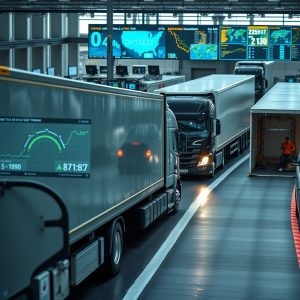
One of the most significant advantages of tech-enabled fleet monitoring is the ability to achieve real-time transit visibility. In the past, logistics managers were often left in the dark once a shipment left the warehouse, relying on periodic updates or manual check-ins to track progress. Today, GPS tracking and cloud-based dashboards provide live updates on the location, speed, and status of every vehicle in the fleet. This level of transparency is not just a convenience—it’s a necessity in an era where customers expect frictionless logistics interactions and instant gratification.
Real-time visibility also enables responsive transport planning, allowing fleets to adapt to unforeseen challenges such as traffic jams, weather disruptions, or last-minute order changes. For example, if a delivery truck encounters a sudden road closure, the system can automatically reroute the vehicle, ensuring that the shipment reaches its destination on time. This agility is particularly valuable in urban areas, where hyper-local transport solutions are increasingly in demand. By leveraging real-time data, fleets can navigate the complexities of city logistics with ease, reducing congestion and improving delivery speeds.
Scalability and the Future of Fleet Management
As businesses grow, so do their logistics needs. Traditional fleet management systems often struggle to keep pace with this expansion, leading to inefficiencies and bottlenecks. Tech-enabled fleet monitoring, however, is inherently scalable, capable of supporting fleets of all sizes—from a handful of vehicles to thousands. Cloud-based platforms can easily integrate new vehicles, drivers, and routes, ensuring that the system grows alongside the business. This scalability is further enhanced by collaborative freight networks, where multiple fleets or logistics providers share data and resources to optimize operations.
Moreover, the data collected through fleet monitoring can be used to refine data-driven cargo management strategies. By analyzing historical trends, businesses can identify patterns in demand, optimize load distribution, and reduce empty return trips. This not only improves efficiency but also contributes to a more sustainable logistics ecosystem. For instance, predictive analytics can help fleets consolidate shipments, reducing the number of vehicles on the road and lowering emissions. In this way, tech-enabled fleet monitoring is not just a tool for efficiency—it’s a catalyst for value-added logistics support that benefits businesses, customers, and the planet alike.
Personalization and the Human Element
While technology is the driving force behind modern fleet monitoring, it’s important not to overlook the human element. After all, logistics is ultimately about connecting people—whether it’s delivering a package to a customer’s doorstep or ensuring that a business receives the supplies it needs to operate. Tech-enabled fleets are increasingly incorporating personalized delivery scheduling to meet the unique needs of individual customers. For example, some systems allow recipients to choose specific delivery windows or redirect packages to alternative locations, such as a neighbor’s house or a nearby pickup point. This level of flexibility enhances the customer experience, fostering loyalty and trust.
Driver well-being is another critical aspect of fleet monitoring. Advanced systems can track driver fatigue, monitor adherence to safety protocols, and even provide real-time coaching to improve performance. By prioritizing the health and safety of drivers, businesses can reduce accidents, lower insurance costs, and create a more positive work environment. This focus on the human side of logistics ensures that technology serves as an enabler rather than a replacement, enhancing rather than diminishing the role of people in the supply chain.
The logistics industry is undergoing a profound transformation, and at the center of this change is the rise of tech-enabled fleet monitoring. By harnessing the power of real-time data, AI, and IoT, fleets are becoming smarter, more efficient, and more adaptable than ever before. This evolution is not just about improving operational metrics—it’s about redefining what’s possible in logistics. From reducing environmental impact to enhancing customer satisfaction, the benefits of a data-driven, scalable fleet are far-reaching. As technology continues to advance, the line between the physical and digital worlds will blur even further, creating a logistics ecosystem that is as seamless as it is powerful. The future of transport is here, and it’s being driven by the unseen engine of innovation.