The Alchemy of Efficiency: How Predictive Freight Tracking and Intelligent Route Planning Are Forging a Frictionless Logistics Interaction

The modern logistics landscape is no longer just about moving goods from point A to point B. It’s about orchestrating a symphony of precision, where every note—every delivery, every route, every interaction—harmonizes to create an experience that feels almost effortless. At the heart of this transformation lies the fusion of predictive freight tracking and intelligent route planning, two technologies that are redefining what it means to interact with logistics systems. Together, they are not just optimizing operations; they are crafting a new paradigm where friction is minimized, visibility is maximized, and every stakeholder—from the warehouse manager to the end consumer—benefits from a seamless flow of information and goods.
The Power of Prediction: Redefining Freight Tracking
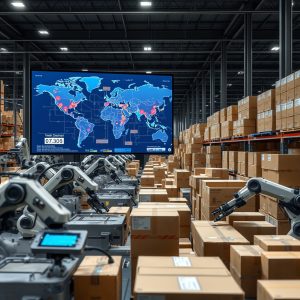
Predictive freight tracking is more than just a tool for knowing where a shipment is at any given moment. It’s a crystal ball that peers into the future, anticipating delays, disruptions, and opportunities before they even arise. By leveraging vast amounts of historical data, real-time inputs, and advanced machine learning algorithms, this technology can forecast potential bottlenecks—whether it’s a traffic jam on a major highway, a weather-related delay at a port, or an unexpected surge in demand. The result? Logistics providers can proactively reroute shipments, adjust schedules, and communicate transparently with customers, turning potential headaches into mere blips on the radar.
Consider a scenario where a hurricane is forecasted to hit a coastal region. Traditional logistics systems might scramble to react once the storm has already disrupted operations. But with predictive freight tracking, the system can identify at-risk shipments days in advance, suggest alternative routes, and even preemptively notify customers of potential delays. This level of foresight doesn’t just save time and money; it builds trust. Customers no longer feel like they’re at the mercy of unpredictable forces. Instead, they experience a sense of control and reliability, knowing that their logistics partner is always one step ahead.
Intelligent Route Planning: The Art of Optimization
If predictive freight tracking is the crystal ball, then intelligent route planning is the master strategist, turning foresight into action. This technology goes beyond static maps and fixed schedules. It dynamically adjusts routes based on a multitude of factors—traffic patterns, fuel efficiency, driver availability, delivery windows, and even carbon emissions. The goal is not just to find the shortest path, but the smartest one: the route that balances speed, cost, sustainability, and customer satisfaction.
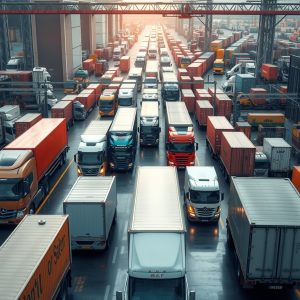
Take, for example, a delivery fleet operating in a bustling urban environment. Traditional route planning might rely on fixed schedules, leading to inefficiencies like idling in traffic, missed delivery windows, or unnecessary fuel consumption. Intelligent route planning, however, continuously analyzes real-time data to adjust routes on the fly. If a traffic accident blocks a major artery, the system can reroute drivers through less congested streets. If a customer requests a last-minute change to their delivery window, the system can recalibrate the entire fleet’s schedule to accommodate it without disrupting other deliveries. The result is a logistics operation that feels almost intuitive, adapting seamlessly to the ever-changing demands of the real world.
The Human Element: Customer-Centric Logistics
At its core, the fusion of predictive freight tracking and intelligent route planning is about more than just efficiency—it’s about redefining the customer experience. In an era where consumers expect instant gratification and personalized service, logistics can no longer afford to be a faceless, transactional process. Customers want to feel seen, heard, and valued, and technology is making that possible in ways that were once unimaginable.
Imagine a world where a customer can track their shipment in real time, receive proactive updates about delays or changes, and even interact with the system to adjust delivery preferences on the fly. This is the promise of a frictionless logistics interaction. It’s not just about delivering a package; it’s about delivering peace of mind. When customers feel empowered and informed, their trust in the logistics provider deepens, fostering long-term loyalty and satisfaction.
Sustainability as a Byproduct of Efficiency
One of the most compelling byproducts of this technological evolution is its impact on sustainability. Intelligent route planning doesn’t just optimize for speed and cost; it also prioritizes fuel efficiency and reduced emissions. By minimizing idle time, avoiding congested routes, and consolidating deliveries, logistics providers can significantly lower their carbon footprint. Predictive freight tracking further enhances this by reducing the need for expedited shipments or last-minute reroutes, which often come with a higher environmental cost.
In a world where sustainability is no longer a nice-to-have but a must-have, these technologies offer a way for logistics providers to align their operations with broader environmental goals. Customers, too, are increasingly conscious of the ecological impact of their purchases, and they appreciate knowing that their logistics partner is committed to reducing waste and emissions. It’s a win-win: efficiency drives sustainability, and sustainability enhances the brand’s reputation and appeal.
The Future of Frictionless Logistics
The journey toward a truly frictionless logistics experience is still unfolding, but the progress made so far is nothing short of revolutionary. Predictive freight tracking and intelligent route planning are not just tools; they are the building blocks of a smarter, more responsive, and more customer-centric logistics ecosystem. As these technologies continue to evolve, they will unlock new levels of efficiency, transparency, and sustainability, transforming the way goods move around the world.
Yet, the true magic lies not in the technology itself, but in the experiences it enables. When logistics providers embrace these innovations, they aren’t just streamlining their operations—they are redefining what it means to deliver. They are turning a once-mundane process into an experience that feels seamless, personalized, and even delightful. And in doing so, they are not just meeting customer expectations; they are exceeding them, one intelligent route and one predictive insight at a time. The future of logistics isn’t just about moving faster; it’s about moving smarter, and in the process, creating a world where friction is a thing of the past.