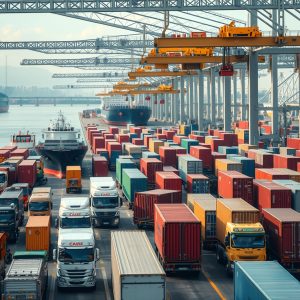
Mastering the Flow: Optimizing Your Distribution Network for Peak Performance

In today’s hyper-connected and fast-paced global marketplace, the efficiency of your distribution network is no longer just an operational consideration; it’s a critical determinant of your competitive advantage and overall business success. A well-oiled distribution network ensures that products reach their intended destinations swiftly, cost-effectively, and in optimal condition, directly impacting customer satisfaction, brand reputation, and ultimately, profitability. Neglecting its optimization can lead to bottlenecks, increased costs, lost sales, and a diminished market presence.
The Pillars of an Effective Distribution Network
At its core, a distribution network is the intricate web of facilities, transportation services, and processes designed to move goods from the point of origin to the point of consumption. Building and maintaining an effective network requires a strategic approach, focusing on several key pillars:
Strategic Facility Location
The placement of warehouses, distribution centers, and cross-docking facilities is paramount. Proximity to key markets, suppliers, and transportation hubs can significantly reduce transit times and shipping costs. Advanced analytics and geographical information systems (GIS) can help identify optimal locations that balance cost, accessibility, and service levels. Considering factors like labor availability, real estate costs, and local regulations is also crucial in this decision-making process.
Transportation Management Optimization
Choosing the right transportation modes and optimizing routes are vital. Whether it’s leveraging maritime transport for bulk international shipments, air cargo services for time-sensitive deliveries, or land transportation for last-mile delivery, each mode has its advantages. Integrating transportation management systems (TMS) can provide real-time visibility, enable dynamic route planning, consolidate shipments, and negotiate better rates with carriers. This not only cuts costs but also improves delivery reliability.
Inventory Management and Control
Balancing inventory levels is a delicate act. Holding too much inventory ties up capital and increases storage costs, while holding too little risks stockouts and lost sales. Modern inventory management techniques, often supported by warehouse management systems (WMS), utilize demand forecasting, just-in-time (JIT) principles, and safety stock calculations to maintain optimal levels. Visibility into inventory across the entire network allows for better allocation and reduces the need for costly expedited shipments.
Technology Integration and Visibility
Technology is the connective tissue of any modern distribution network. From Enterprise Resource Planning (ERP) systems that integrate various business functions to specialized WMS and TMS, technology provides the visibility and control necessary for efficient operations. Real-time tracking of shipments, automated data capture through RFID and barcode scanning, and predictive analytics for potential disruptions are essential tools. This digital backbone enables proactive decision-making and faster response times.
Addressing the Challenges in Distribution Network Design
Designing and managing a distribution network is fraught with challenges. Global logistics complexities, fluctuating fuel prices, unpredictable demand, and the ever-increasing expectations of consumers for faster deliveries all add layers of difficulty. Furthermore, ensuring compliance with trade regulations and customs clearance processes for international movements adds another dimension of complexity.
The Rise of E-Commerce and Last-Mile Delivery
The explosion of e-commerce has fundamentally reshaped distribution networks. The demand for rapid, often same-day or next-day, last-mile delivery requires agile and responsive logistics solutions. This often involves optimizing urban logistics, utilizing micro-fulfillment centers, and exploring innovative delivery methods. The pressure on the final leg of the journey is immense, making efficient last-mile delivery a key differentiator.
Sustainability and Green Logistics
There is a growing imperative for businesses to adopt sustainable practices throughout their supply chains. This includes reducing carbon emissions through optimized routing and fuel-efficient fleets, minimizing packaging waste, and exploring eco-friendly transportation options. A sustainable distribution network not only benefits the environment but can also lead to long-term cost savings and enhance brand image.
The Role of Third-Party Logistics (3PL) Providers
For many companies, managing a complex distribution network internally can be overwhelming and resource-intensive. This is where third-party logistics (3PL) providers play a crucial role. These specialized companies offer expertise, infrastructure, and technology to manage various aspects of the supply chain, including warehousing, transportation, and order fulfillment. Outsourcing logistics functions to a 3PL can provide access to a broader network, economies of scale, and specialized knowledge, allowing businesses to focus on their core competencies.
Leveraging Data for Continuous Improvement
The key to sustained success in distribution network management lies in continuous improvement, driven by data. By meticulously tracking key performance indicators (KPIs) such as on-time delivery rates, order accuracy, inventory turnover, and transportation costs, businesses can identify areas for optimization. Analyzing this data allows for informed adjustments to routes, inventory policies, facility utilization, and carrier selection. Embracing a data-driven culture ensures that the distribution network evolves alongside market demands and technological advancements, maintaining its efficiency and competitive edge.
Ultimately, a robust and agile distribution network is the engine that drives business growth in the modern economy. It requires a holistic approach, integrating strategic planning, technological adoption, and a commitment to continuous improvement. By mastering the flow of goods, businesses can unlock new levels of efficiency, reduce operational costs, enhance customer satisfaction, and solidify their position in the global marketplace, ensuring that every product reaches its destination with precision and speed.