The Strategic Integration of AI in Modern Logistics: Revolutionizing Supply Chain Solutions and Freight Forwarding

In an era where global trade is expanding at an unprecedented pace, the logistics industry faces mounting pressure to deliver faster, more efficient, and cost-effective solutions. The integration of artificial intelligence (AI) into logistics management is not just a trend—it’s a transformative force reshaping supply chain solutions, freight forwarding, and transportation services. From predictive analytics to autonomous fleet management, AI is redefining how businesses approach international trade, cargo shipping, and last-mile delivery.
The AI Revolution in Supply Chain Visibility
One of the most significant challenges in global logistics has always been visibility. Businesses and consumers alike demand real-time tracking of shipments, whether they’re moving via maritime transport, air cargo services, or land transportation. AI-powered platforms now provide end-to-end visibility, leveraging machine learning algorithms to predict delays, optimize routes, and even suggest alternative transportation methods. For freight forwarders, this means fewer disruptions, lower costs, and improved customer satisfaction. The ability to anticipate bottlenecks before they occur allows companies to proactively adjust their distribution networks, ensuring that goods reach their destinations on time, every time.
For example, AI-driven predictive analytics can analyze historical data, weather patterns, and geopolitical events to forecast potential disruptions in global logistics. If a storm is predicted to delay maritime transport in a key shipping lane, the system can automatically reroute cargo through air freight or alternative sea routes. This level of agility is invaluable in an industry where timing is everything, particularly for perishable goods reliant on cold chain logistics or time-sensitive e-commerce deliveries.
Autonomous Systems and Fleet Management
The rise of autonomous vehicles and drones is another frontier where AI is making waves. While fully autonomous trucks may still be a few years away from widespread adoption, semi-autonomous features—such as platooning, where trucks drive in close formation to reduce fuel consumption—are already being tested. AI-powered fleet management systems optimize fuel efficiency, reduce idle time, and even predict maintenance needs before breakdowns occur. This not only extends the lifespan of vehicles but also ensures that transportation services remain uninterrupted, a critical factor in maintaining the flow of international trade.
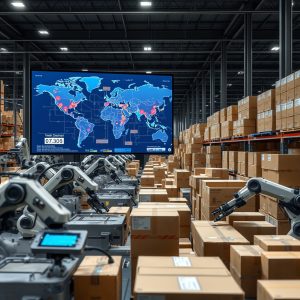
In warehouses, AI-driven robotics are revolutionizing warehouse management by automating picking, packing, and sorting processes. These systems work alongside human employees, handling repetitive tasks with precision and speed. The result? Faster order fulfillment, reduced labor costs, and fewer errors—all of which contribute to a more efficient supply chain. For e-commerce logistics, where speed and accuracy are paramount, AI-powered automation is a game-changer, enabling businesses to meet the growing demands of online shoppers without compromising on quality.
The Role of AI in Customs Clearance and Trade Compliance
Navigating the complexities of customs clearance and trade compliance has long been a pain point for businesses engaged in export-import operations. AI is simplifying this process by automating documentation, flagging potential compliance issues, and even predicting tariff changes. Machine learning models can analyze vast amounts of trade data to identify patterns and anomalies, ensuring that shipments comply with ever-changing regulations. This reduces the risk of costly delays or penalties, allowing businesses to focus on what they do best: moving goods across borders.
For third-party logistics (3PL) providers, AI offers a competitive edge by streamlining operations and enhancing service offerings. By integrating AI into their platforms, 3PLs can provide clients with real-time insights into their supply chains, from inventory levels to shipment status. This level of transparency builds trust and fosters long-term partnerships, as businesses gain greater control over their logistics operations.
Enhancing Last-Mile Delivery with AI
The last mile of delivery is often the most challenging and expensive part of the logistics process. AI is helping businesses overcome these hurdles by optimizing delivery routes, predicting customer availability, and even enabling autonomous delivery vehicles. For e-commerce logistics, where customer expectations for speed and convenience are higher than ever, AI-driven solutions are essential for staying competitive. Dynamic routing algorithms, for instance, can adjust delivery paths in real-time based on traffic conditions, weather, or even customer preferences, ensuring that packages arrive as quickly and efficiently as possible.
Moreover, AI-powered chatbots and virtual assistants are improving customer communication by providing real-time updates on shipment status, estimated delivery times, and even handling returns or complaints. This not only enhances the customer experience but also reduces the burden on customer service teams, allowing them to focus on more complex inquiries.
The Future of AI in Global Logistics
As AI continues to evolve, its applications in logistics will only become more sophisticated. We’re already seeing the emergence of digital twins—virtual replicas of physical supply chains—that allow businesses to simulate and optimize their operations in a risk-free environment. These digital twins can test the impact of new strategies, such as changes in distribution networks or the adoption of new transportation services, before they’re implemented in the real world. This reduces the risk of costly mistakes and ensures that businesses can adapt quickly to changing market conditions.
Another exciting development is the use of AI in sustainable logistics. By optimizing routes, reducing fuel consumption, and minimizing waste, AI is helping businesses reduce their carbon footprint while also cutting costs. For companies engaged in global trade, sustainability is no longer just a buzzword—it’s a business imperative. AI provides the tools needed to achieve these goals without sacrificing efficiency or profitability.
The logistics industry has always been the backbone of global commerce, but the integration of AI is taking it to new heights. By harnessing the power of predictive analytics, autonomous systems, and real-time data, businesses can create supply chain solutions that are not only more efficient but also more resilient. In a world where disruptions are inevitable, AI offers the agility and intelligence needed to navigate the complexities of international trade, freight forwarding, and last-mile delivery. The future of logistics is here, and it’s being driven by artificial intelligence—a force that is transforming the way goods move around the world, one algorithm at a time.