The Strategic Blueprint: How Data-Driven Logistics Management is Reshaping Global Supply Chains

The modern global supply chain is a complex, dynamic ecosystem where efficiency, speed, and reliability are not just competitive advantages—they are survival imperatives. As businesses expand across borders and consumer expectations evolve at an unprecedented pace, logistics management has emerged as the cornerstone of operational success. Yet, the traditional approaches to freight forwarding, warehouse management, and transportation services are no longer sufficient. The future of logistics lies in harnessing the power of data to create intelligent, adaptive, and resilient supply chain solutions.
The Data Revolution in Logistics
Data has become the new currency of logistics, transforming how businesses approach everything from cargo shipping to last mile delivery. Advanced analytics, artificial intelligence (AI), and the Internet of Things (IoT) are enabling companies to move beyond reactive decision-making and embrace predictive, real-time strategies. For instance, AI-driven demand forecasting allows businesses to anticipate market fluctuations, optimize inventory levels, and reduce waste—particularly critical in cold chain logistics, where perishable goods require precise temperature control and timely distribution.
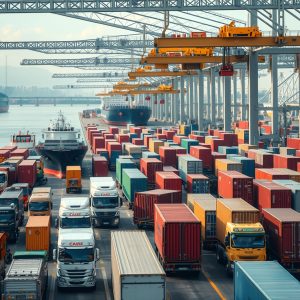
In freight forwarding, data analytics is revolutionizing route optimization, reducing transit times, and minimizing fuel consumption. By analyzing historical shipping data, weather patterns, and traffic conditions, logistics providers can identify the most efficient paths for air cargo services, maritime transport, and land transportation. This not only enhances operational efficiency but also contributes to sustainability efforts by lowering carbon emissions.
The Role of Technology in Trade Compliance and Customs Clearance
Navigating the labyrinth of international trade regulations and customs clearance has long been a bottleneck for businesses engaged in export-import operations. However, technology is streamlining these processes, reducing delays, and mitigating risks. Automated trade compliance platforms leverage AI to scan and interpret complex regulatory frameworks, ensuring that shipments adhere to local and international laws. This is particularly valuable in industries with stringent requirements, such as pharmaceuticals, food, and electronics, where non-compliance can result in costly fines or shipment seizures.
Blockchain technology is also making waves in customs clearance by providing a transparent, tamper-proof ledger for tracking shipments. This not only enhances security but also builds trust among stakeholders, from freight forwarders to customs authorities. By digitizing documentation and automating verification processes, businesses can accelerate clearance times, reduce paperwork, and minimize human error.
Optimizing Warehouse Management for the Digital Age
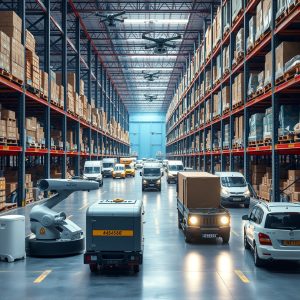
Warehouse management has undergone a seismic shift, driven by the rise of e-commerce and the demand for faster order fulfillment. Traditional warehouses, once static storage facilities, are now dynamic hubs of activity where automation and robotics play a pivotal role. Autonomous mobile robots (AMRs) and automated guided vehicles (AGVs) are increasingly used to streamline picking, packing, and sorting processes, significantly reducing labor costs and improving accuracy.
Moreover, warehouse management systems (WMS) powered by AI and machine learning are enabling real-time inventory tracking, reducing stockouts, and preventing overstocking. These systems can also integrate with transportation management systems (TMS) to create a seamless flow of goods from warehouse to doorstep. For businesses operating in the e-commerce logistics space, this integration is critical for meeting the expectations of next-day or even same-day delivery.
The Last Mile Challenge: Innovation Meets Consumer Expectations
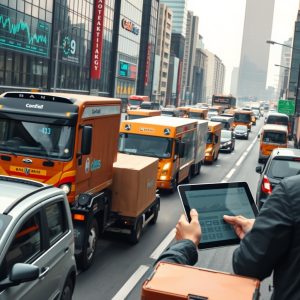
Last mile delivery remains one of the most challenging and costly aspects of the supply chain. As consumers increasingly prioritize speed and convenience, logistics providers are exploring innovative solutions to bridge the gap between distribution centers and end customers. Drones, autonomous delivery vehicles, and crowd-sourced delivery networks are just a few of the technologies being tested to enhance last mile efficiency.
In urban areas, micro-fulfillment centers are gaining traction as a way to reduce delivery times and costs. These compact warehouses, often located within city limits, enable businesses to store high-demand products closer to consumers, facilitating faster order fulfillment. Additionally, route optimization algorithms are being used to consolidate deliveries, reducing the number of trips required and lowering the environmental impact of last mile logistics.
Fleet Management: The Engine of Efficient Transportation Services
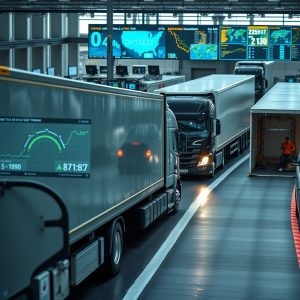
For businesses reliant on land transportation, fleet management has become a critical component of logistics strategy. Telematics, GPS tracking, and AI-powered predictive maintenance are transforming how companies manage their fleets, improving fuel efficiency, reducing downtime, and enhancing driver safety. Real-time monitoring of vehicle performance allows logistics managers to identify potential issues before they escalate, preventing costly breakdowns and delays.
Furthermore, the integration of electric and hybrid vehicles into fleets is gaining momentum as businesses seek to reduce their carbon footprint. Governments and regulatory bodies are also incentivizing the adoption of sustainable transportation solutions, making it an opportune time for companies to invest in greener fleet management practices.
The Future of Global Logistics: Collaboration and Integration
The next frontier in logistics management is not just about adopting new technologies—it’s about fostering collaboration and integration across the entire supply chain. Third-party logistics (3PL) providers are playing an increasingly vital role in this ecosystem, offering businesses access to specialized expertise, scalable infrastructure, and advanced technology without the need for significant capital investment. By partnering with 3PL providers, companies can focus on their core competencies while leveraging the provider’s global distribution network and logistics capabilities.
Moreover, the rise of digital marketplaces and logistics platforms is enabling greater visibility and coordination among stakeholders. These platforms connect shippers, carriers, and logistics providers in real-time, facilitating dynamic pricing, capacity matching, and end-to-end tracking. As a result, businesses can achieve greater agility, reduce costs, and respond more effectively to disruptions, whether caused by geopolitical tensions, natural disasters, or shifting consumer demands.
The logistics landscape is evolving at a breakneck pace, driven by technological advancements and the relentless pursuit of efficiency. Businesses that embrace data-driven logistics management, invest in innovative solutions, and foster collaboration across their supply chains will not only survive but thrive in this new era. The key to success lies in viewing logistics not as a cost center, but as a strategic asset—one that can unlock new opportunities, drive growth, and redefine the future of global trade.