
The Invisible Thread: How Efficient Warehouse Management Powers the Global Supply Chain
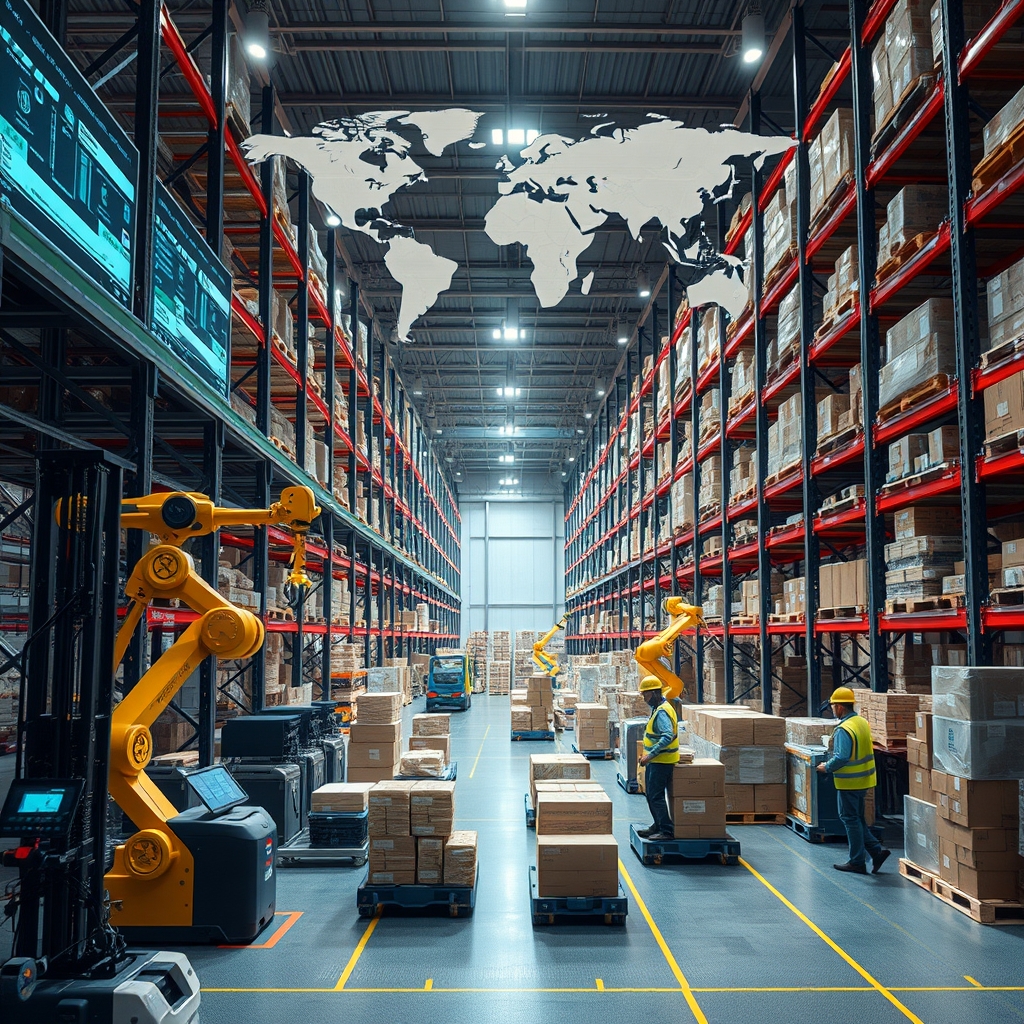
In the vast and intricate web of global trade, warehouse management often operates as the unseen thread holding everything together. While freight forwarding, maritime transport, and last mile delivery frequently steal the spotlight, the efficiency of warehouse operations can make or break the entire supply chain. A well-managed warehouse is not just a storage facility; it is a dynamic hub where precision, technology, and strategy converge to ensure that goods flow seamlessly from manufacturers to consumers.
The Heartbeat of Supply Chain Solutions
At its core, warehouse management is about more than just stacking boxes. It involves a complex interplay of inventory control, order fulfillment, and space optimization. Modern supply chain solutions rely on warehouses to act as critical nodes in the distribution network, where goods are received, sorted, stored, and dispatched with minimal delay. The rise of e-commerce logistics has further amplified the importance of warehouses, as businesses now demand faster turnaround times and higher accuracy in order processing. A single inefficiency in warehouse operations can cascade into delays, increased costs, and dissatisfied customers.
Advanced warehouse management systems (WMS) have become indispensable tools in this environment. These systems leverage real-time data to track inventory levels, monitor stock movements, and automate routine tasks such as picking and packing. By integrating WMS with other logistics management tools, businesses can achieve end-to-end visibility across their supply chain, enabling them to anticipate demand fluctuations and adjust their strategies accordingly. The result is a more agile and responsive supply chain, capable of adapting to the ever-changing demands of global trade.
The Role of Automation in Warehouse Efficiency
Automation is transforming warehouse management from a labor-intensive process into a high-tech operation. Robotics, artificial intelligence, and machine learning are now commonplace in modern warehouses, where they handle tasks ranging from automated guided vehicles (AGVs) transporting goods to robotic arms sorting and packaging items. These technologies not only speed up operations but also reduce human error, leading to higher accuracy and lower operational costs.
For example, in cold chain logistics, where temperature-sensitive goods such as pharmaceuticals and perishable foods are stored, automation ensures that products are kept within strict temperature ranges throughout their journey. Automated systems can monitor and adjust environmental conditions in real time, preventing spoilage and ensuring compliance with regulatory standards. Similarly, in e-commerce logistics, automation enables warehouses to process thousands of orders per day, meeting the expectations of consumers who demand next-day or even same-day delivery.
Optimizing Space and Workflow
One of the biggest challenges in warehouse management is maximizing the use of available space while maintaining efficient workflows. Poorly designed warehouses can lead to congestion, misplaced inventory, and inefficiencies that ripple across the supply chain. To combat this, businesses are adopting innovative storage solutions such as vertical racking systems, dynamic slotting, and cross-docking techniques. These strategies allow warehouses to store more goods in less space while ensuring that high-demand items are easily accessible.
Dynamic slotting, for instance, involves rearranging inventory based on demand patterns. Items that are frequently ordered together are stored in close proximity, reducing the time it takes for workers to pick and pack orders. Cross-docking, on the other hand, minimizes storage time by transferring goods directly from inbound to outbound transportation, bypassing the need for long-term storage. These techniques not only improve efficiency but also reduce the carbon footprint of warehouse operations by minimizing unnecessary movements and energy consumption.
Navigating Trade Compliance and Customs Clearance
Warehouses also play a pivotal role in ensuring trade compliance and facilitating smooth customs clearance. In international trade, goods often pass through multiple warehouses before reaching their final destination. Each of these warehouses must adhere to local and international regulations, including those related to product safety, labeling, and documentation. Failure to comply with these regulations can result in costly delays, fines, or even the seizure of goods.
To mitigate these risks, warehouses are increasingly integrating trade compliance tools into their operations. These tools automate the process of verifying that goods meet regulatory requirements, generating the necessary documentation for customs clearance, and tracking the movement of goods across borders. By streamlining these processes, warehouses can reduce the time and effort required to move goods through the supply chain, ensuring that they reach their destination on time and without complications.
The Future of Warehouse Management
As global trade continues to evolve, so too will the role of warehouse management. The integration of emerging technologies such as the Internet of Things (IoT), blockchain, and predictive analytics will further enhance the efficiency and transparency of warehouse operations. IoT devices, for example, can provide real-time data on the condition of goods, while blockchain can create an immutable record of every transaction, improving traceability and accountability.
Predictive analytics, meanwhile, will enable warehouses to anticipate demand more accurately, allowing them to optimize inventory levels and reduce waste. These advancements will not only benefit businesses but also consumers, who will enjoy faster, more reliable delivery of goods. As warehouses become smarter and more connected, they will continue to serve as the backbone of the global supply chain, ensuring that the invisible thread of logistics remains unbroken.
The efficiency of a supply chain is often determined by the strength of its weakest link. In a world where speed, accuracy, and reliability are paramount, warehouse management stands as a testament to the power of precision and innovation. By embracing technology and optimizing operations, businesses can transform their warehouses from mere storage facilities into strategic assets that drive success in the competitive landscape of global trade. The future of logistics is not just about moving goods from point A to point B; it is about doing so with intelligence, agility, and an unwavering commitment to excellence.