The Strategic Nexus: How Integrated Logistics Management Powers the Export-Import Ecosystem

The global export-import business thrives on precision, timing, and seamless coordination. At the heart of this intricate dance lies logistics management, a multifaceted discipline that ensures goods move efficiently across borders, compliance hurdles are cleared, and supply chains remain resilient. For businesses engaged in international trade, mastering logistics isn’t just an operational necessity—it’s a competitive advantage that can make or break profitability.
The Pillars of Export-Import Logistics
Effective logistics in the export-import ecosystem rests on three foundational pillars: transportation services, trade compliance, and supply chain visibility. Each pillar plays a distinct yet interconnected role in ensuring that goods reach their destination without delays, cost overruns, or regulatory snags.
1. Transportation Services: The Lifeline of Global Trade
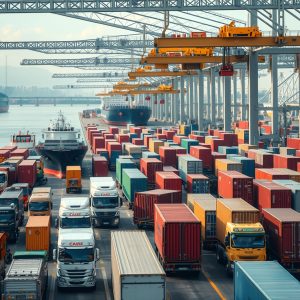
From maritime transport to air cargo services, the choice of transportation mode directly impacts cost, speed, and reliability. Maritime shipping remains the backbone of bulk trade, offering cost-effective solutions for large volumes, while air freight provides unmatched speed for time-sensitive shipments. Meanwhile, land transportation bridges the gap between ports, warehouses, and final delivery points, ensuring a seamless flow from origin to destination.
For businesses, selecting the right mix of transportation modes requires balancing urgency, budget, and cargo type. Perishable goods, for instance, may demand cold chain logistics, while high-value electronics might prioritize air freight for security and speed. The rise of intermodal transportation—combining rail, road, and sea—has further optimized routes, reducing transit times and environmental impact.
2. Trade Compliance: Navigating the Regulatory Maze
No discussion of export-import logistics is complete without addressing trade compliance and customs clearance. Every country imposes its own set of regulations, tariffs, and documentation requirements, making compliance a complex but non-negotiable aspect of global trade. Missteps in this area can lead to costly delays, fines, or even shipment seizures.
Modern logistics providers leverage technology to streamline compliance, using automated systems to classify goods, calculate duties, and generate required documentation. Customs brokers and freight forwarders play a critical role here, acting as intermediaries who ensure shipments meet all legal requirements before crossing borders. With the advent of digital trade platforms, businesses can now track compliance status in real time, reducing the risk of errors and expediting clearance.
3. Supply Chain Visibility: The Power of Real-Time Insights
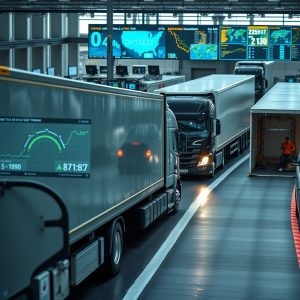
In an era where disruptions—from geopolitical tensions to natural disasters—can upend even the most meticulously planned supply chains, visibility has emerged as a game-changer. Advanced logistics management systems now offer end-to-end tracking, allowing businesses to monitor shipments at every stage of the journey. This transparency enables proactive decision-making, whether rerouting a delayed shipment or adjusting inventory levels based on real-time demand.
For e-commerce businesses, visibility is particularly critical. Last-mile delivery—the final leg of the supply chain—often determines customer satisfaction. Technologies like GPS tracking, IoT sensors, and AI-driven route optimization ensure that packages arrive on time, every time. Meanwhile, warehouse management systems (WMS) provide granular insights into inventory levels, reducing stockouts and overstocking.
The Role of Third-Party Logistics (3PL) in Export-Import Efficiency
For many businesses, managing logistics in-house is neither practical nor cost-effective. This is where third-party logistics (3PL) providers come into play. By outsourcing logistics functions—such as freight forwarding, warehousing, and distribution network management—companies can focus on their core competencies while leveraging the expertise of specialized partners.
3PL providers offer scalability, allowing businesses to expand into new markets without the burden of building their own logistics infrastructure. They also bring industry-specific knowledge, such as handling hazardous materials or navigating complex trade agreements. For small and medium-sized enterprises (SMEs), partnering with a 3PL can level the playing field, enabling them to compete with larger players in the global market.
Innovations Shaping the Future of Export-Import Logistics
The logistics landscape is undergoing a rapid transformation, driven by technological advancements and evolving consumer expectations. Artificial intelligence (AI) and machine learning are optimizing route planning, predicting demand, and even automating warehouse operations. Blockchain technology is enhancing transparency and security in supply chains, reducing fraud and ensuring the authenticity of goods.
Sustainability is another key trend reshaping logistics. With growing pressure to reduce carbon footprints, businesses are exploring eco-friendly transportation options, such as electric fleets and alternative fuels. Green logistics isn’t just a moral imperative—it’s becoming a business necessity, as consumers and regulators alike demand more sustainable practices.
As the export-import ecosystem continues to evolve, one thing remains clear: logistics management is no longer a back-office function but a strategic enabler of global trade. Businesses that embrace innovation, prioritize compliance, and leverage the expertise of logistics partners will be best positioned to navigate the complexities of international commerce. The ability to move goods efficiently, compliantly, and sustainably isn’t just about keeping pace with competitors—it’s about setting the standard for the future of trade.